
Cadillac's Newest Electric SUVs Are Projecting AR Directly Onto the Road
Years of quiet investment are starting to show up on actual dashboards. Envisics, a UK-based company that's spent nearly a decade developing holographic display technology, has confirmed it's the exclusive augmented reality head-up display provider for the 2026 Cadillac VISTIQ, with the LYRIQ-V following as the second General Motors model to carry the same system. It's a milestone moment for a company that's been working with GM behind the scenes for years, and it marks the first time Envisics' newest AR-HUD hardware has made it into a production vehicle customers can actually buy.
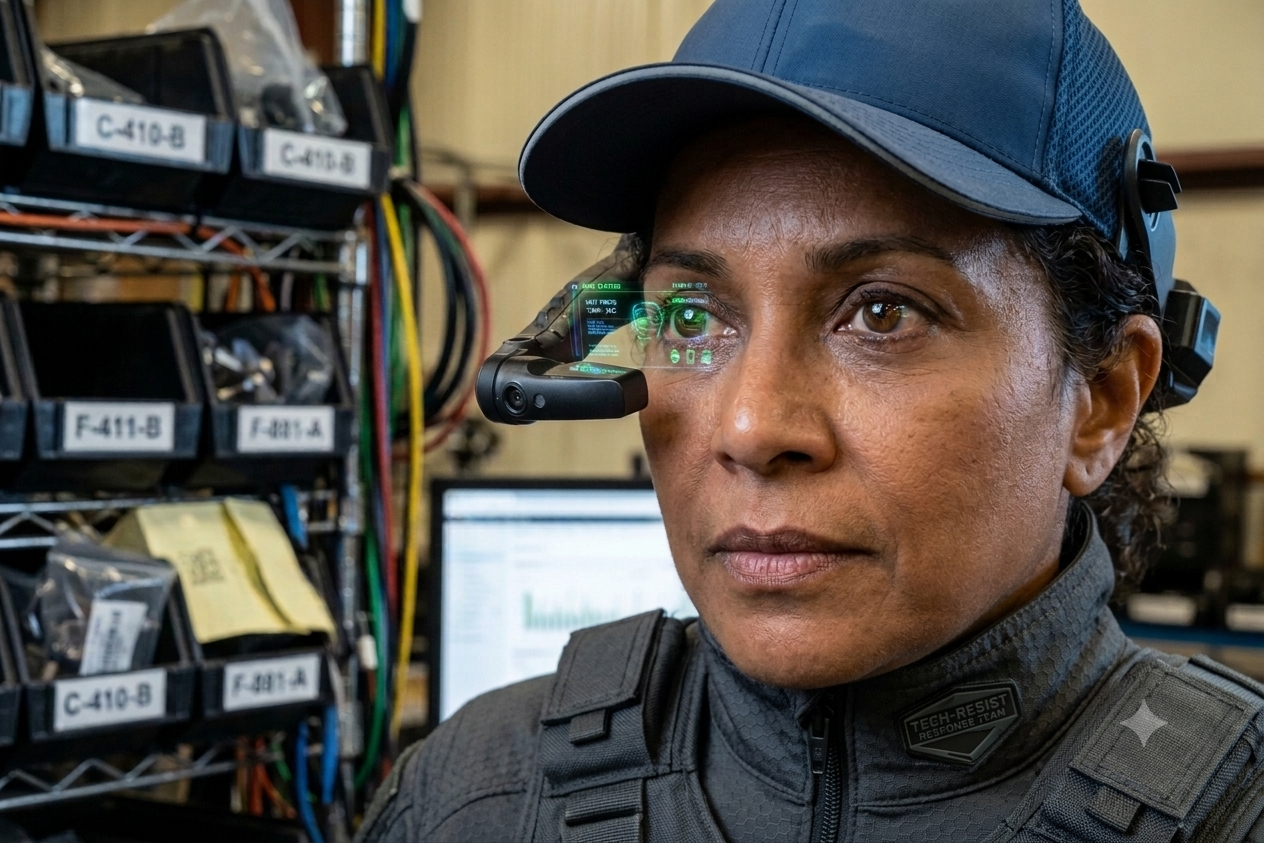
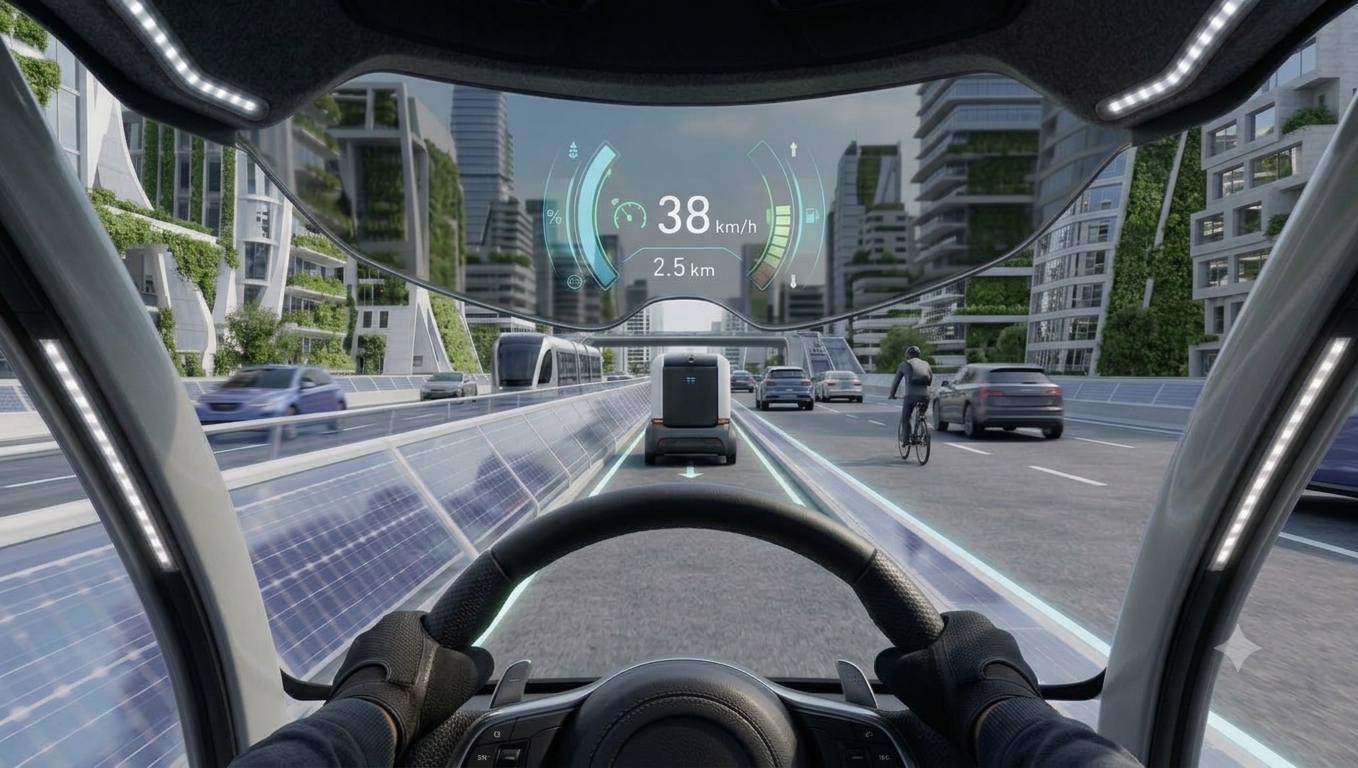
Both vehicles use what Envisics calls its GEN-2 AR-HUD technology, a system built specifically for these two models rather than adapted from a more generic display. Unlike a conventional head-up display that just projects flat numbers like speed onto the windshield, an AR-HUD like this is designed to layer graphics onto the driver's actual view of the road itself, so navigation arrows, hazard warnings, or lane guidance can appear to sit directly on the road ahead rather than floating as a separate readout the driver has to mentally map onto their surroundings. Envisics builds this using holographic projection rather than a simpler reflected-image approach, which is generally what allows the graphics to appear properly anchored to real-world objects and distances instead of looking like a flat overlay hovering in front of the car. Production of both vehicles is now underway at GM's Spring Hill Manufacturing plant in Tennessee.
This deal didn't come out of nowhere. GM Ventures, General Motors' investment arm, has been backing Envisics since fairly early in the company's history, participating in its Series B round back in 2018 and again in its Series C round in 2023, a round that ultimately brought in more than $100 million total. That kind of sustained, multi-round backing from an automaker rather than a purely financial investor is a strong signal GM saw this technology as something worth developing specifically for its own future vehicles, not just a speculative bet on a promising startup. Envisics founder and CEO Dr. Jamieson Christmas pointed to that early support directly, describing GM Ventures' involvement from the company's formative stage as a key reason Envisics was able to make the leap from research project to an actual production part.
The VISTIQ itself is a new three-row luxury electric SUV that Cadillac is positioning as a global model, with sales planned in the U.S. and Canada alongside other markets. Its arrival effectively fills in the last gap in Cadillac's SUV lineup, meaning the brand will now offer an electric option across every size class of luxury SUV it sells. GM Ventures managing director Anirvan Coomer framed the Envisics partnership as an example of GM's broader strategy of investing early in promising technology companies and helping them scale, arguing that the real payoff of that approach is now visible in the form of AR features actually reaching Cadillac EV customers rather than staying in the prototype stage indefinitely.
For Envisics, which is headquartered in Milton Keynes, UK, and operates as something of a center of excellence for holographic display technology aimed at automotive and mobility applications, landing a production seat in two GM vehicles is a meaningful proof point in a space where a lot of AR-HUD technology has stayed confined to concept cars and trade show demos rather than reaching actual customers. Whether GM extends the technology further across its lineup beyond these two models will likely depend on how well it's received in the VISTIQ and LYRIQ-V, but having it in production at all puts Envisics ahead of a lot of automotive AR suppliers still waiting for their first real-world deployment.