
France's Train Stations Are Getting a Dose of Augmented Reality History
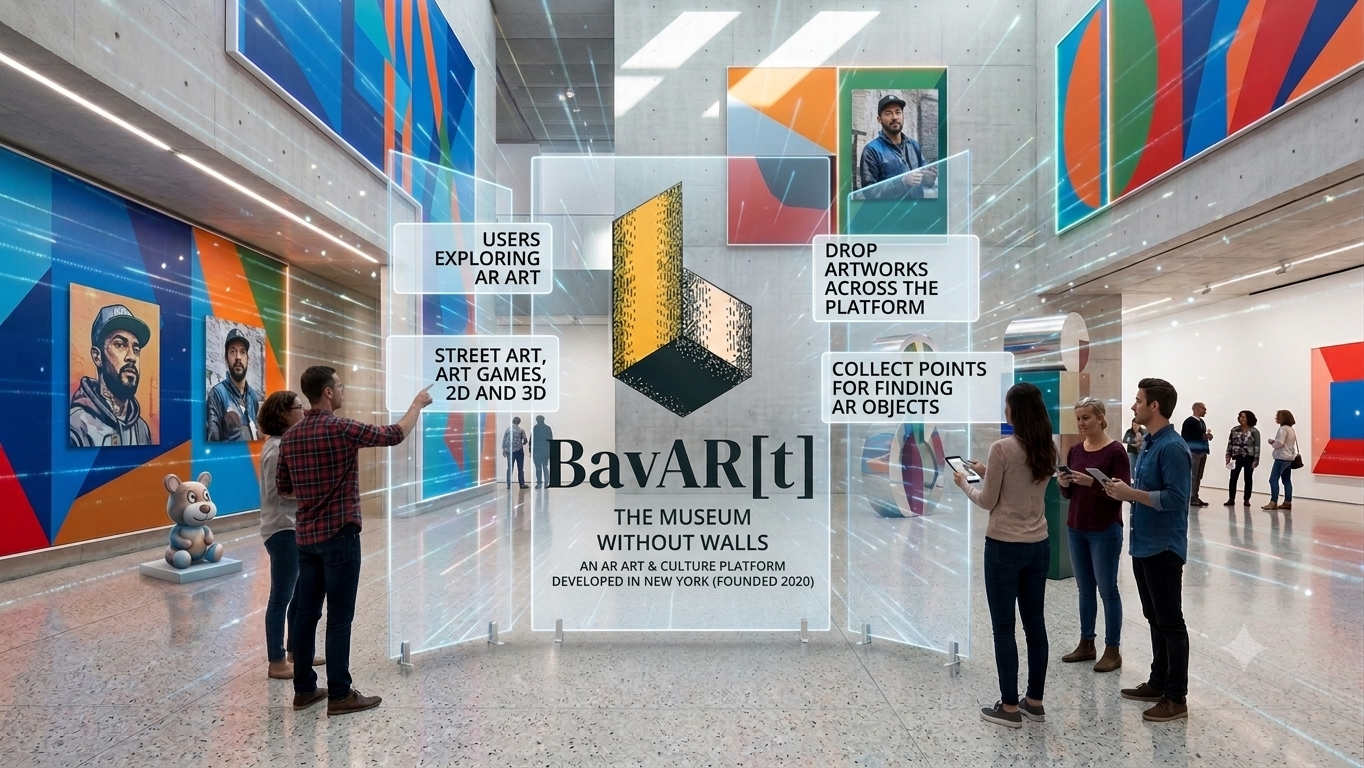
Waiting for a train is rarely anyone's favorite part of traveling, but at a handful of stations across France, that dead time is being turned into something else entirely. French augmented reality studio BavAR[t] has partnered with SNCF Gares & Connexions, the operator responsible for the design and management of France's railway stations, along with France's Ministry of Armed Forces, to build a network of AR experiences that connect major train stations to nearby memorial sites. The goal, according to the companies involved, is to turn the concourse into a doorway to national remembrance rather than just a place to catch a train, giving passengers, tourists, and students alike a reason to slow down and engage with history in a space they would normally pass through without a second thought.
The idea is built around layering. Each participating station hosts a physical photo exhibition, but that display is really just the surface of the experience. Point a phone at the right spot and an AR layer kicks in, pulling up animations, narrated audio, quizzes, and background text that go well beyond what's printed on the panels. Altogether, the finished network is expected to include around 50 digital points of interest spread across the five stations, each one built from the same combination of animation, audio, quiz, and written context. BavAR[t] has said the archival material used within the app is actually broader than what's shown physically on the exhibition panels, so even a traveler who has walked past the display many times before might still discover something new by opening the app and exploring further. The experience is free to use and available in four languages — French, English, Spanish, and German — a detail that suggests the team designed it with tourists and international travelers in mind just as much as daily commuters passing through on their way to work.
The rollout itself is happening gradually rather than all at once, spread across five stations, each one twinned with a specific memorial, with launches staggered from late 2025 into early 2027. Lyon-Part-Dieu was first out of the gate, going live in December 2025 alongside the Montluc Prison National Memorial, a former wartime prison used to hold members of the French Resistance. That was followed by Saint-Raphaël Valescure in May 2026, which connects travelers to the Indochina War Memorial in Fréjus. Still to come are Verdun, which will pair with the Fleury-devant-Douaumont National Necropolis this coming September, Toulon, linked to the Memorial of the Landing and Liberation of Provence on Mont-Faron in October, and finally Strasbourg, tied to the Natzweiler-Struthof Memorial — the site of the only Nazi concentration camp built on present-day French soil — which will close out the rollout in March 2027.
None of this has come together through BavAR[t] working alone. The project is led jointly by the Ministry of Armed Forces' veterans and war victims office, known as ONaCVG, together with SNCF Gares & Connexions, and draws on historical and archival contributions from organizations such as ECPAD, France's official defense audiovisual archive, along with FNAM, La France Mutualiste, and Les Gueules Cassées, depending on which memorial site is involved and what records and imagery each is able to contribute. BavAR[t]'s role in the partnership is largely technical, providing the AR platform and the underlying infrastructure that brings the experience to life, while its institutional partners contribute the historical depth, archival photographs, and educational framing that give the project its substance. Yannick Pazzé, BavAR[t]'s co-founder and chief operating officer, described the collaboration as an effort to transform mobility spaces into immersive memory journeys, tying stations and memorial sites together into a single connected cultural experience that's open to anyone passing through, regardless of whether they set out that day looking for a history lesson.
There's something notable about choosing train stations, arguably among the least sentimental spaces imaginable, as entry points into national memory. It reflects a bet that people are more likely to engage with history when it's placed in front of them unannounced, folded into the rhythm of an ordinary commute, rather than requiring a deliberate visit to a museum or memorial. It also fits into a broader pattern of cultural institutions and public infrastructure operators experimenting with augmented reality as a low-cost, easily updated way of reaching large captive audiences, rather than building standalone apps or exhibits that people have to seek out on their own. Whether that bet pays off in terms of genuine public engagement remains to be seen, but the infrastructure is being built regardless, station by station and memorial by memorial, with the full five-site network expected to be complete by March 2027.