
U.S. Air Force Deepens Investment in Embodied AI, Boosting Palladyne AI Contract Past $10.6M
The intersection of military tech and advanced robotics has reached a major turning point. The U.S. Air Force has officially exercised an option to invest an additional $2.9 million into Palladyne AI’s Strategic Funding Increase (STRATFI) contract, driving the cumulative value of the project to over $10.6 million.
This latest financial backing signals more than just a routine contract extension—it highlights the rapid transition of "embodied AI" from theoretical R&D into field-ready deployment for modern defense operations.
Powering Next-Gen Robotics with Palladyne IQ
At the center of this expanded agreement is Palladyne IQ, the company's hardware-agnostic embodied AI platform. Engineered specifically for complex, unstructured, and contested environments, the system addresses one of the hardest hurdles in robotics: enabling machines to learn physical, real-world tasks from just one to five human demonstrations.
Once trained, these autonomous systems can generalize those learned skills across varying environments and execute complex missions entirely at the edge, without requiring cloud connectivity.
What the New Funding Will Deliver
The freshly obligated capital will directly fuel a series of critical performance and capability milestones, including:
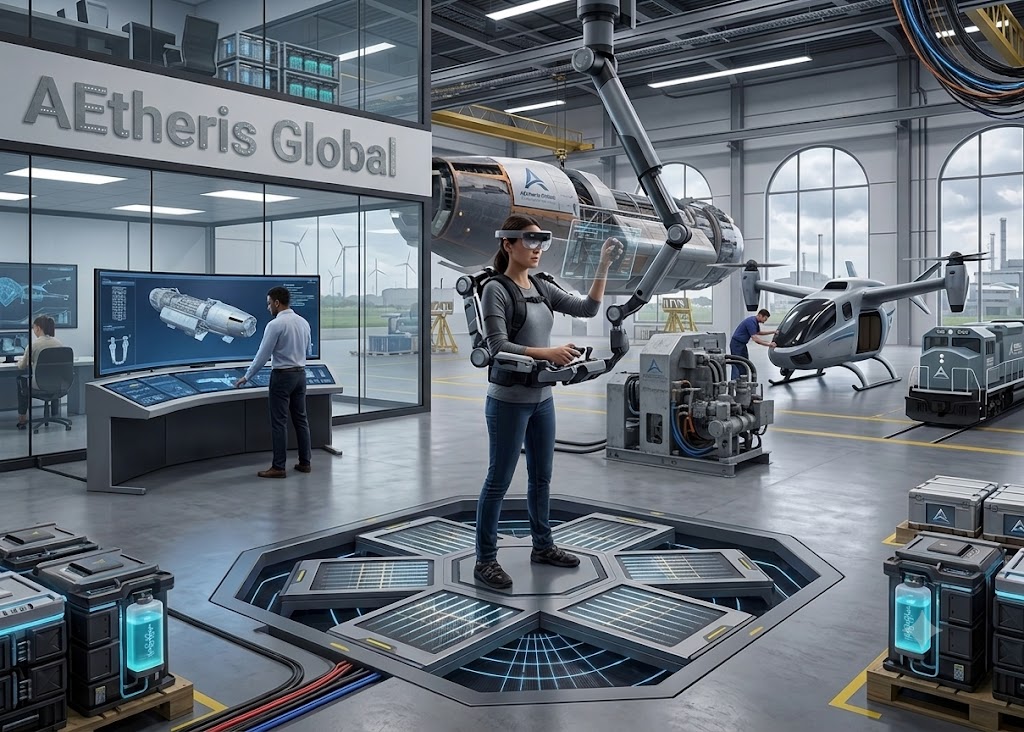
- Mixed-Reality Teleoperation: Facilitating seamless, real-time collaboration between remote subject matter experts and human operators.
- Human-Guided Machine Learning: Empowering robotic assets to autonomously grasp intricate manipulation tasks after watching minimal human guidance.
- Edge-Native Adaptation: Showcasing real-time sensor fusion and adaptive intelligence directly on hardware operating in mission-relevant scenarios.
Industry Impact and the Road Ahead
The STRATFI initiative—originally launched under the formal title “Cybernetic Training for Autonomous Robots – Human Augmentation via Generalizable Mobile Autonomous Robot Dexterity (C-H)”—has steadily expanded through milestone-driven reinvestments since its inception.
Reflecting on the expanded partnership, Palladyne AI CEO Ben Wolff emphasized the weight of the Air Force's continued support:
"When a customer like the U.S. Air Force commits nearly $3 million more after seeing your technology perform, that is an unambiguous signal. Palladyne IQ's AI architecture is working."
As defense sectors increasingly prioritize systems capable of operating independently in high-risk, communication-degraded zones, the scaling success of edge-native robotics points toward a sweeping transformation not only for military defense, but eventually for commercial logistics and industrial automation worldwide.