
Kia's Wild Concept Car Turns the Entire Windshield Into a 3D Display
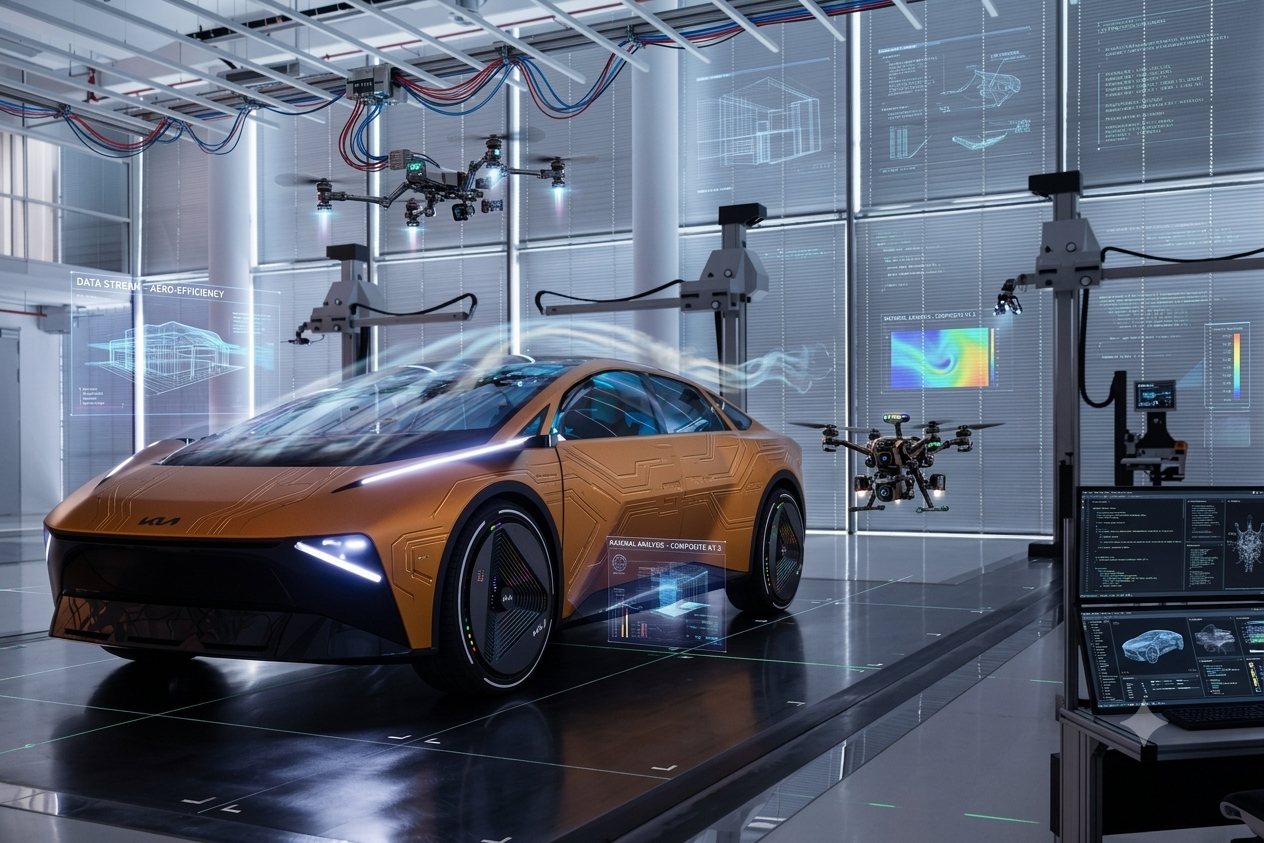
Most head-up displays in cars today are a small, flat rectangle of light hovering somewhere near the bottom of the windshield, showing speed and maybe a turn arrow. Kia's newest concept car throws that entire idea out and replaces it with something far stranger: a windshield that becomes a genuine 3D display from edge to edge. The Vision Meta Turismo concept, built in collaboration with Finnish display company Distance Technologies, was shown outside Korea for the first time at Milan Design Week, and it marks the first time a mainstream consumer automaker has integrated Distance's panoramic lightfield head-up display technology into an actual vehicle, even if that vehicle is still very much a concept rather than something buyable.
The Vision Meta Turismo itself isn't brand new — it first appeared back in December 2025 during Kia's 80th anniversary celebrations in Korea — but the version making the rounds at Milan Design Week is the first time the wider world outside Korea has gotten a look at it, and the first time it's been shown alongside this particular HUD technology. According to the two companies, the concept is meant to explore where in-vehicle digital interaction is heading, specifically by aligning what the vehicle's systems know with how a driver actually perceives their surroundings, rather than just adding more digital readouts for the sake of it.
The technical trick behind the display is what Distance calls a panoramic lightfield HUD, an edge-to-edge system with what the company describes as infinite pixel depth stretched across the full windshield. Instead of projecting a flat image that sits at a fixed distance from the driver's eyes, the system uses computational optics to render graphics with real spatial depth, so navigation cues or other visual information appear to exist naturally within the actual 3D environment outside the car rather than floating on top of it like a sticker on glass. Distance is fairly emphatic that this effect doesn't require any headset, goggles, or other wearable hardware — the entire 3D effect comes from the windshield display itself, which is precisely the point that separates it from typical AR headset experiences and keeps the technology usable by a driver who obviously can't have their vision blocked by a headset.
Kia's Oliver Samson, Senior Chief Designer at the company's European Design Center, described the Vision Meta Turismo as a reflection of Kia's broader vision for future mobility, one that blends dynamic performance, human-centered design, and advanced digital interaction into a single package. He was fairly direct in framing the collaboration as being about more than simply adding information to the glass in front of the driver, describing it instead as an attempt to rethink how digital intelligence gets woven into a vehicle in a way that feels intuitive and refined rather than bolted on. Distance CEO and co-founder Urho Konttori went even further, calling the announcement a genuine milestone for the automotive industry as a whole, arguing that the technology bridges what he described as centuries of difference between a windshield as a simple slab of glass and a windshield as a see-through portal for blending physical and digital information seamlessly.
For now, this stays firmly in concept territory. Distance has been clear that the lightfield HUD technology is currently limited to this one showcase vehicle, and neither company has announced any plans to bring it to an actual production car people could buy. That's a fairly normal place for automotive concept technology to sit — plenty of flashy concept-car features never make it past the auto show circuit — but having a company like Kia willing to put its name on the first real-world vehicle integration of this kind of lightfield display is still a meaningful signal for where windshield-based AR could eventually head, even if it's likely still years away from showing up in something parked in an actual driveway.