
GE HealthCare Just Bet $24 Million on Giving Surgeons X-Ray Vision
Surgeons performing minimally invasive procedures have always had to solve a strange mental puzzle: interpret a flat, two-dimensional scan and then mentally translate it into the three-dimensional reality of what's actually happening inside a patient's body in real time. MediView XR has spent years building technology meant to remove that translation step entirely, and the company just closed a $24 million Series A round led by GE HealthCare to push that technology further into everyday clinical use. Cleveland Clinic, Mayo Clinic, Edge Ventures, and JobsOhio Growth Capital Fund also joined the round, which is a notable lineup given that two of the country's most prominent hospital systems are backing the company directly rather than just licensing its technology after the fact.
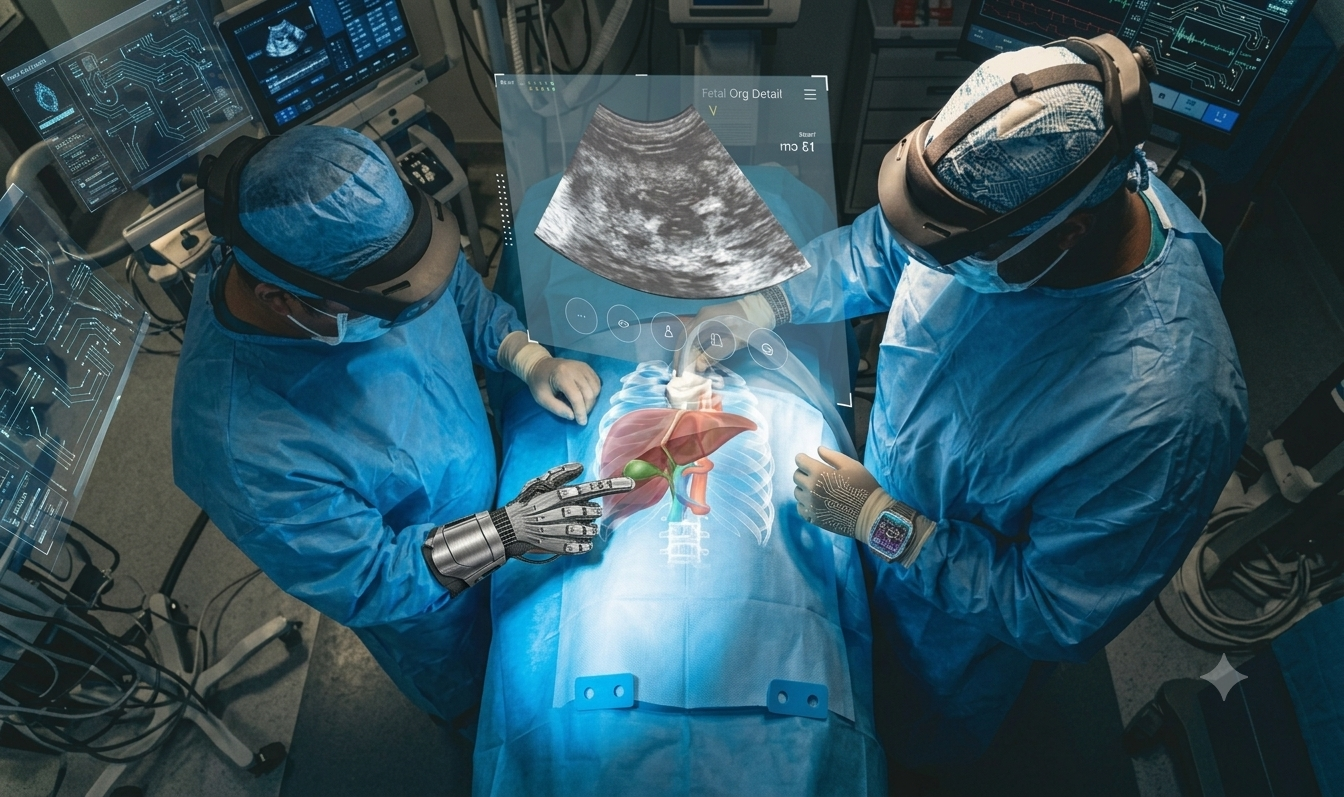
MediView's core product is an FDA-cleared augmented reality platform that essentially gives clinicians a kind of X-ray vision during a procedure. The system pulls together a patient's 3D imaging data, combining sources like CT scans and live ultrasound, and overlays that information directly onto the patient's body through an AR headset, letting a surgeon see organs, blood vessels, and targets like tumors positioned exactly where they sit beneath the skin rather than having to glance away at a separate monitor and mentally reconstruct the anatomy. The goal, according to the company, is cutting down on the mental workload that comes with interpreting traditional 2D imaging mid-procedure, which in theory should make it easier to stay precise during complex interventions and keep the surgical workflow moving without constant interruption.
One feature that's easy to overlook but genuinely useful in practice is the system's support for remote collaboration. Because the visualization and guidance tools can be shared with other clinicians, a specialist elsewhere could look at the same real-time AR overlay a surgeon is seeing and offer input or guidance during the procedure itself, rather than only being consulted beforehand or after the fact. For rarer or more complicated cases, that kind of real-time second opinion could matter quite a bit.
MediView CEO Mina Fahim framed the company's broader mission as simplifying and democratizing how clinicians make decisions during procedures, arguing that giving them intuitive, real-time 3D guidance tools should make less invasive procedures both more predictable and more widely accessible, rather than being limited to hospitals with the most specialized imaging expertise on staff. That framing lines up with what the company says it plans to do with the new funding: grow clinical and commercial adoption of its existing platform, deepen partnerships with imaging and medical device companies to broaden how the technology gets used, push forward on further clinical validation and regulatory approvals beyond what it's already secured, and scale up its operations to keep pace with demand.
The fact that GE HealthCare is leading this round rather than a typical venture fund is arguably the most telling detail here. GE HealthCare already sells a huge share of the imaging hardware, the CT and ultrasound machines, that MediView's platform depends on to function in the first place, so a direct investment suggests GE sees real strategic value in pairing its imaging equipment with an AR layer on top of it, rather than treating MediView as a standalone niche player operating on the sidelines of the broader medical imaging market. If that combination gains traction, it could end up shaping how imaging hardware and AR guidance get sold together going forward, rather than as two separate purchases hospitals have to coordinate on their own.