
Nearly 4,000 Lufthansa Passengers Have Now Watched Movies in VR at 35,000 Feet
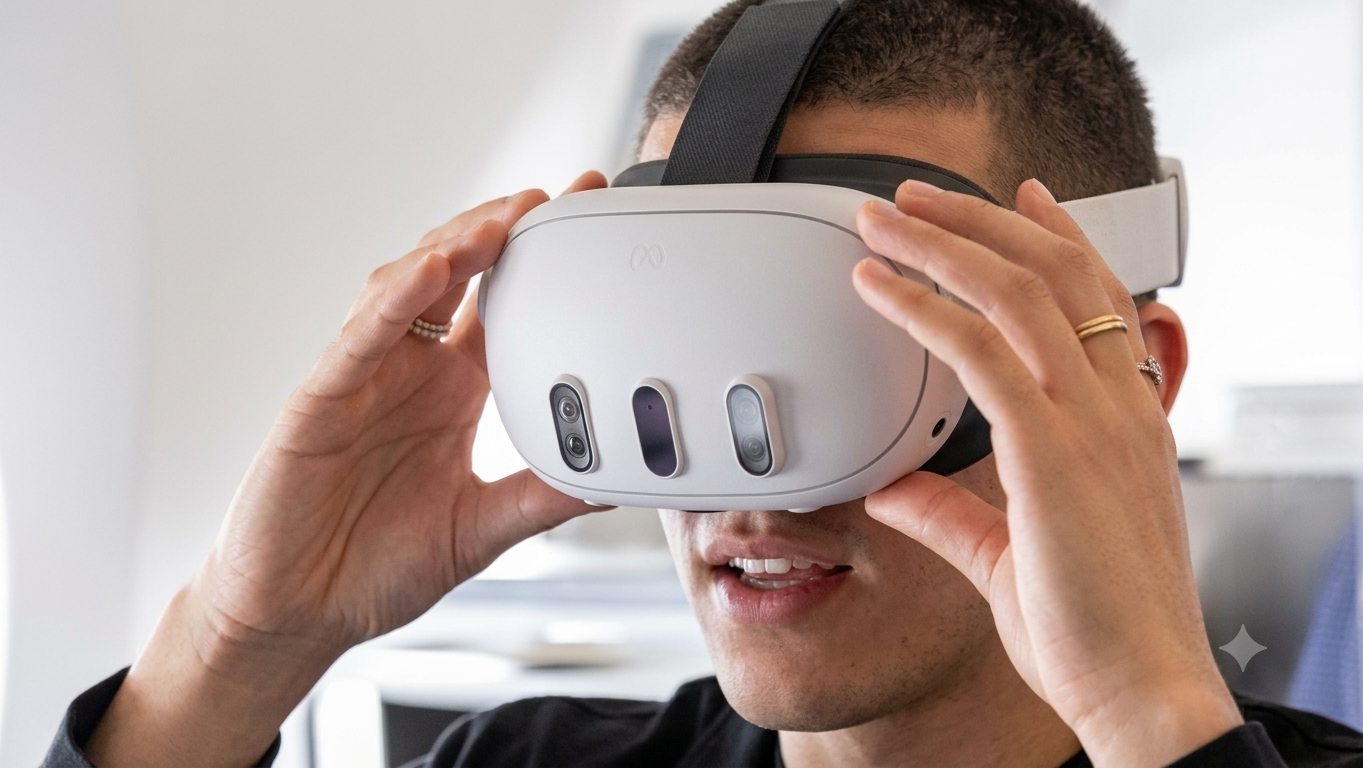
Business Class seats have always tried to sell comfort as the main perk of paying more to fly, but Meta and Lufthansa have been quietly testing whether the bigger upgrade is actually a change of scenery altogether. The two companies have shared an update on their pilot program putting Quest 3 headsets in front of passengers, and the early numbers suggest there's real appetite for strapping on a headset mid-flight rather than just staring at a seatback screen.
The program builds on Travel Mode, a feature Meta introduced last year that lets a Quest headset be used safely and comfortably in the cramped, motion-heavy environment of an airplane cabin, blending mixed reality with the physical seat and tray table rather than fully blocking it out. Since launching the pilot on select international routes, Meta says close to 4,000 travelers have used the service, and passenger feedback has been overwhelmingly positive. The headsets are being offered specifically to passengers flying in Lufthansa's Allegris Business Class Suite, where travelers can use the Quest 3 to watch movies on a large virtual screen, take in virtual sightseeing of destinations, play interactive games, run through guided meditation sessions, or simply settle into more passive, lean-back content for the length of a long flight.
Lufthansa's Bjoern Becker, who leads the airline's Future Intercont Experience program, described the initiative's success as confirmation that immersive technology is going to be part of how in-flight entertainment evolves going forward, rather than a passing gimmick. That sentiment got an unusual boost from an entirely different industry: as part of the same activation, Lufthansa partnered with CUPRA, the Volkswagen Group's electric vehicle brand, to run what the companies describe as the first in-flight virtual test-drive experience. On selected Allegris Business Class routes between Munich and destinations including New York, Cape Town, and parts of India, passengers were able to configure and customize a virtual CUPRA Tavascan and explore a virtual CUPRA Garage to learn more about the brand and its lineup, all from their seat. That four-month pilot wrapped up in February, and CUPRA's global head of marketing, Patrick Sievers, framed it as a way of reaching an entirely new audience for car shopping and brand engagement in an environment where a captive, relaxed passenger has nothing else competing for their attention.
The broader in-flight offering hasn't gone unnoticed either. Lufthansa, Meta, and developer MSM.Digital were jointly awarded the 2025 APEX Award for Best Inflight Entertainment, an industry recognition specifically aimed at innovative and effective approaches to keeping passengers entertained onboard. Sarah Malkin, Director of Entertainment Content at Meta's Reality Labs, called the activation a pivotal moment for both Travel Mode and Meta's broader immersive services efforts, and said the company is now focused on bringing the offering to more airlines and refining its overall product suite rather than treating Lufthansa as a one-off partner.
Meta hasn't committed to specific dates or named which airlines might come next, saying only that it plans to expand the service to more carriers and routes in the near future. Still, the combination of real usage numbers, a genuine industry award, and a cross-industry partnership with an automaker suggests this has moved well past the experimental stage. If Meta can translate a successful pilot on one airline into a standard offering across several, in-flight VR could end up being one of the more visible, everyday touchpoints where ordinary travelers, not just early tech adopters, end up putting on a headset for the first time.