
High School Gyms Are Turning Into Disaster Zones, Thanks to the Army National Guard
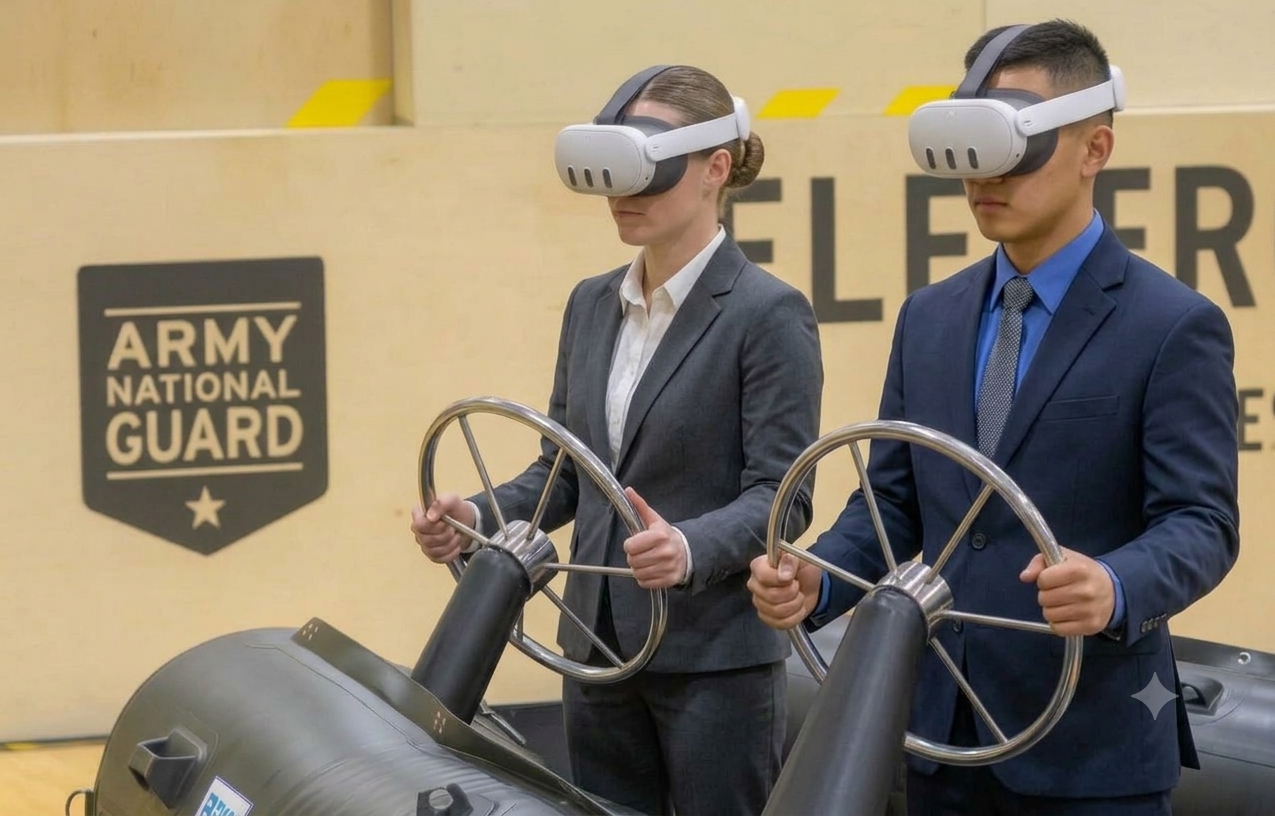
It's not every day a high school gymnasium gets converted into a flood zone or an earthquake site, but that's exactly what's happening as part of a new nationwide tour from the U.S. Army National Guard. The program, called Disasterville, uses mixed reality technology to put students directly into the middle of simulated emergencies, giving them a hands-on sense of what disaster response actually looks like rather than just hearing about it secondhand.
The setup is built around three separate 10-minute missions, each one modeled on a real category of disaster the Guard regularly responds to. Students strap on VR headsets, split into teams, and work through objectives tied to the scenario in front of them. In the wildfire mission, teams race to put out fires threatening nearby homes, rescue trapped animals, and navigate around hazards like falling trees. The flood zone mission puts students in a virtual Zodiac boat in the aftermath of a hurricane, where they have to locate and evacuate survivors while steering around debris and other hazards in the water. The third mission drops students into the aftermath of an earthquake that's caused a train derailment involving hazardous materials, where they use tools like the Jaws of Life to free trapped civilians and clear the wreckage.
What makes the program more than just a novelty is the intent behind it. Rather than simply entertaining students with VR for its own sake, the missions are structured to force teamwork and quick problem-solving under pressure, mirroring the kind of decision-making Guard personnel actually rely on during real emergencies. Students have to communicate clearly with teammates, prioritize who needs help first, and adjust on the fly as conditions in the simulation change, all of which reflects the actual skill set the National Guard is trying to showcase rather than just the technology itself.
The Guard has been fairly direct about why it's investing in something like this now. With natural disasters becoming more frequent and more severe across the country, the organization wants younger generations to have a clearer picture of what domestic emergency response actually involves, both as a matter of public awareness and, presumably, as a way of putting the Guard's work in front of potential future recruits at an age when they're starting to think about career paths. Framing it as an immersive, almost game-like experience is a deliberate way of making that message land with a teenage audience that might tune out a more traditional presentation.
Disasterville isn't a one-off event either — it's structured as a rolling tour, with stops at select high schools across February and March in Detroit, Michigan, Indianapolis, Indiana, and Omaha, Nebraska. That format lets the Guard reach a fairly wide, geographically spread audience of students without needing a permanent, fixed installation, and it fits a pattern that's become increasingly common in immersive tech: rather than building something people have to seek out, organizations are bringing VR and MR experiences directly into everyday spaces like school gyms, where the audience is already gathered and the impact of stepping into a simulated disaster can land immediately.