
Kopin Is Having a Big Month, Landing Both an Army Research Deal and a $7.5 Million Helmet Order
Two separate contract wins landing in the same stretch of time can either be a coincidence or a sign that a company's technology is hitting its moment. For Kopin Corporation, a long-time supplier of microdisplays and optical systems for defense and aerospace clients, it looks a lot like the latter. The company has announced both a new research contract with the U.S. Army focused on next-generation display technology, and a separate $7.5 million order to supply microdisplays for pilot helmet systems, bringing its total contract value for the year to $13.5 million once combined with earlier orders.
The Army deal is less about building a finished product right now and more about laying the groundwork for what comes next. Kopin has been brought on for what's called a Soldier Display Trade Study, essentially a research effort meant to pin down the ideal characteristics for MicroLED-based displays used in extended reality heads-up displays for soldiers. Rather than jumping straight to production, the study is meant to weigh the trade-offs of using ultra-bright MicroLED technology in see-through displays, with the eventual output being something Kopin calls a Microdisplay Requirements and Performance Matrix, essentially a technical blueprint the Army and its suppliers can use to guide how future soldier vision systems actually get designed. Practically, that means figuring out how to build displays that stay readable in direct sunlight, don't drain battery life too quickly, and remain visible whether a soldier is operating in blinding daylight or near-total darkness.
The reason MicroLED is worth studying this closely comes down to a handful of real advantages over the display technologies currently used in similar systems. According to Kopin, MicroLED offers higher brightness, better power efficiency, and a longer operating life than older approaches, while also avoiding the flickering or visual artifacts that laser-based scanning displays can introduce, something that matters quite a bit for a soldier staring through a display for extended stretches without wanting eye strain or distraction working against them. The resulting research is meant to inform requirements not just for head-mounted see-through displays but also handheld devices, systems mounted on vehicles or other platforms, and advanced weapon sights, suggesting the Army sees MicroLED as a technology that could end up threaded through several different categories of equipment rather than a single niche use case.
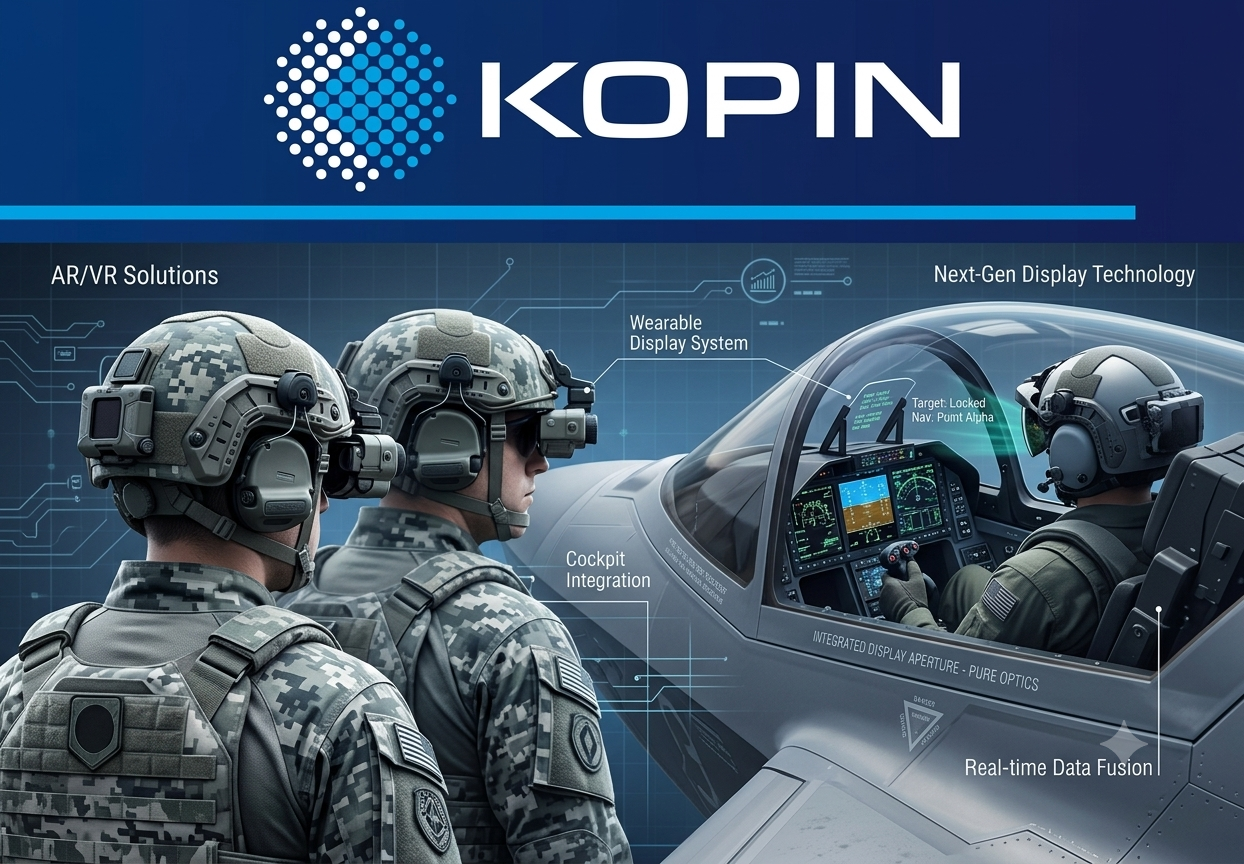
Running in parallel with that research contract is a much more immediate, revenue-generating deal: a multi-year, $7.5 million order to supply microdisplays for pilot Helmet Mounted Display Systems with augmented reality capabilities. Kopin didn't name the customer, describing them only as a Tier 1 Department of Defense prime contractor and a leading global supplier of aerospace and defense equipment, but the scale and nature of the order fits squarely within Kopin's existing niche. The company is already the sole source of displays for the F-35's helmet system, widely considered the most advanced helmet-mounted display in the world, so this new order builds directly on that track record rather than representing an entry into unfamiliar territory. Combined with an earlier $6 million in pilot helmet display orders from earlier in 2025, the new contract pushes Kopin's total for the year up to $13.5 million just from this specific product category.
The purpose of these displays is fairly specific: giving pilots critical mission information directly within their field of view during high-stress moments in flight, integrated into helmets built to each pilot's individual fit. Rather than forcing a pilot to glance down at a separate cockpit display, the system is meant to keep essential data visible without breaking focus from what's happening outside the aircraft, supporting faster reactions as conditions change mid-flight. Kopin says the displays themselves are manufactured in a Class 10 cleanroom facility in the U.S., with each unit going through extensive testing before it ships, which matters given how little room for error there is in equipment meant to function reliably in a fighter cockpit. Taken together, the two contracts paint a picture of a company working both ends of the defense display market at once — shaping the research that will define next-generation soldier displays years down the line, while continuing to fulfill steady, high-value orders for the pilot helmet systems it's already established as a trusted supplier for.