
Fighter Jet-Style Heads-Up Displays Are Coming to a Fleet of 1,000 Military Trucks
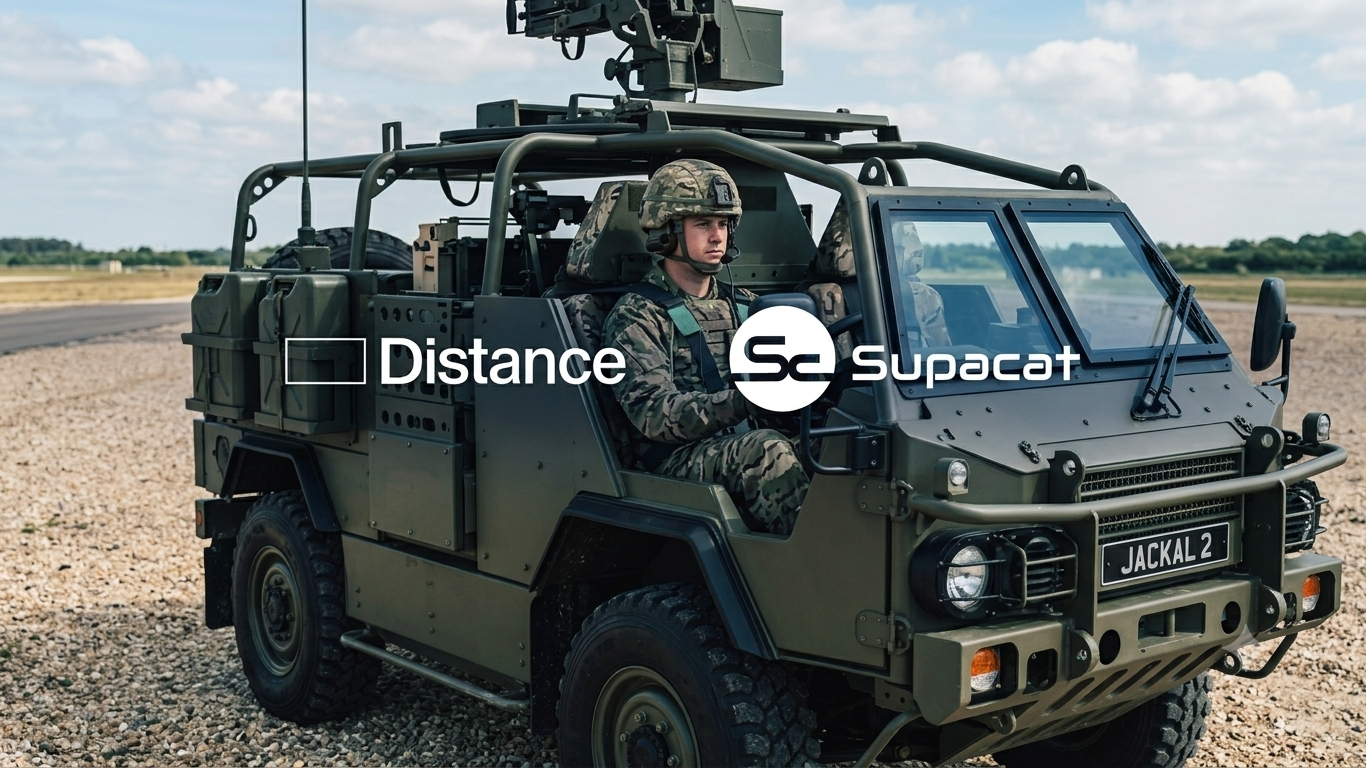
Heads-up displays have been standard equipment in fighter jets for decades, letting pilots keep critical flight data in view without looking away from what's happening outside the cockpit. That same concept is now heading to the ground, with Distance Technologies and British military vehicle manufacturer Supacat signing a three-year framework agreement to bring glasses-free augmented reality displays to Supacat's entire High Mobility Transporter vehicle family, a fleet that runs to roughly 1,000 vehicles worldwide.
The agreement follows a live demonstration at Supacat's recent Capability Day in Farnborough, where Distance showed off its Field Operator HUD built directly into an HMT vehicle in front of British military officials and other defense stakeholders. That demo was apparently convincing enough to move things from a one-off showcase into a genuine long-term commercial arrangement, with Distance being named Supacat's exclusive supplier of AR and computational optics solutions across the HMT lineup, covering navigation, safety, and situational awareness functions, contingent on actual procurement interest from the UK Ministry of Defence and other defense customers around the world. Beyond that exclusivity, the framework also lays groundwork for how future business between the two companies will actually get done, covering things like purchase orders, product delivery, warranties, intellectual property terms, and continued joint demonstrations.
What makes the Field Operator HUD notable is where the information actually appears. Rather than a separate screen mounted on the dashboard that a driver or vehicle commander has to glance toward, the display is built directly into the driver's line of sight, letting them access what the companies describe as mission-critical information without diverting attention away from the road or terrain ahead. The system is designed to project navigation guidance, inclinometer readings for gauging the vehicle's tilt on rough or uneven ground, vehicle telemetry, thermal sensor feeds, mission overlays, and broader situational awareness data all within that same field of view. It also pulls together what's called hyperspectral sensor fusion, essentially blending visible light, infrared, and thermal imaging so the system keeps working across a wide range of conditions, including full daylight, nighttime operations, smoke, and other situations where visibility is degraded.
Supacat's Phil Applegarth, who serves as Director and Head of the company, described the appeal as fairly obvious once his team saw what Distance had built, pointing specifically to the safety benefit for both vehicle crews and dismounted soldiers operating nearby in situations that can turn chaotic quickly. He noted that what started as an impressive demonstration program has since matured into a genuine long-term collaboration with real implications for how future vehicle capabilities get developed. Distance co-founder and CEO Urho Konttori struck a similar note, pointing out that the two companies moved from an initial concept demo to a formal commercial framework in under a year, and framing the goal as giving both drivers and command personnel access to critical mission and vehicle data directly in their field of view, effectively bringing the kind of aerospace-grade perception and awareness pilots have long relied on into the next generation of ground vehicles.
The two companies aren't treating this as a finished deal just yet, either. They've said joint demonstrations and business development work will continue through the rest of 2026, including an appearance at Eurosatory 2026 in Paris, one of the larger international defense trade events, where Distance and Supacat plan to show the Field Operator HUD to a wider international audience of defense buyers. Given that actual deployment across the full HMT fleet still depends on procurement decisions from the Ministry of Defence and other potential customers, the framework agreement is really more of a formalized starting point than a guaranteed rollout, but landing exclusivity across a fleet that size gives Distance a fairly significant foothold in land-based military AR if that procurement interest actually materializes.